
Excavator Training Schools in Uganda. Search for “excavator training schools in Uganda” and you will find no shortage of adverts promising a fast track into a well-paying job. The harder part is telling a genuinely professional programe from a weekend crash course that hands you a certificate with no real machine time behind it. Excavators are used on almost every construction, mining, water, and road project in the country, and contractors have become far more selective about who they let onto a live site. This guide explains what a proper excavator training school in Uganda should teach, how to judge one against another, what certification actually means, and how to turn a few weeks of training into a durable career.
Why Excavator Operators Are in High Demand Across Uganda
Uganda’s infrastructure pipeline is unusually deep for a single year, and excavators sit at the centre of almost every project on it. The Kampala City Roads Rehabilitation Project needs excavators for drainage and utility trenching across dozens of kilometres of urban roads. The Hoima City Stadium and Kabalega International Airport are both racing fixed deadlines that depend on earthworks moving on schedule, and construction tied to the East African Crude Oil Pipeline continues to demand operators who meet strict industrial site standards. Mining and quarry operators need excavators for overburden removal and material handling just as consistently. Every one of these employers is chasing the same small pool of operators who already hold a recognised certificate, which is exactly the gap that structured heavy machinery training in Uganda is built to close.
What Excavator Training Schools in Uganda Actually Teach
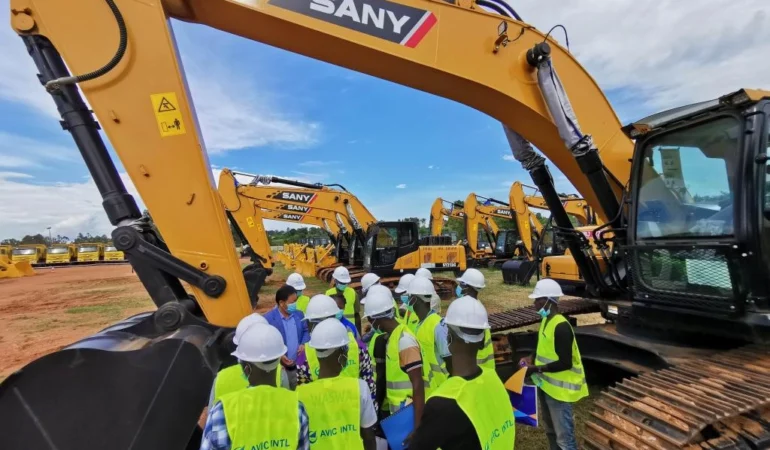
A serious excavator course does not start with you in the cab. It typically opens with safety induction and machine familiarisation, covering pre-start checks, personal protective equipment, and how to read a busy site before you ever touch the joysticks. From there, learners move into controls and manoeuvring in a controlled yard: boom, stick, and bucket coordination, swing control, and travel on uneven ground. Practical modules then build up to digging to specified depths and gradients, trenching for pipelines and foundations, loading trucks accurately, working safely near underground services, and basic daily maintenance checks. The best schools, including the programme run alongside grader and bulldozer training, close with supervised fieldwork and a final practical assessment rather than a purely written test, because employers hire on demonstrated skill, not paperwork alone.
How to Choose the Right Excavator Training School in Uganda
With so many training schools advertising in Kampala and beyond, a handful of questions separate the serious options from the rest. Ask how many hours of actual machine time, not classroom time, each student gets on their own excavator. Ask whether the certificate is tied to a recognised national assessment body or is simply an in-house paper issued by the school itself. Ask about class sizes, since a school running twenty students through one machine cannot give you the same practice as a school with a proper student-to-machine ratio. Ask whether instructors have real site experience operating and supervising excavators, not only teaching experience. Finally, check the school’s own photo gallery for evidence of real students on real machines rather than stock photography, and read through its about page to see how long it has actually been training operators in the country.
Course Duration and What to Expect Week by Week
Most excavator operator programmes in Uganda run for roughly three weeks of full-time, hands-on instruction, which is enough time to take a complete beginner from basic controls to safe, independent operation under supervision. Early days concentrate on safety theory and slow, deliberate control practice in an open yard. The middle stretch introduces trenching, grading to level, and loading exercises with increasing precision requirements. The final days simulate real site conditions, often working alongside other machines such as a wheel loader or a forklift so students learn to operate around other equipment safely, before a supervised final assessment closes the course. Current intake dates and the full course line-up are published on the course listings page.
Certification: Why UVTAB Accreditation Should Be Non-Negotiable
The single biggest difference between excavator training schools in Uganda is what stands behind the certificate at the end. The Uganda Vocational and Technical Assessment Board (UVTAB) is the national body responsible for assessing and certifying hands-on competencies, including skills built through practical, on-the-job style training rather than classroom study alone. A certificate tied to that framework tells an employer, a recruiter, or an immigration officer processing a work permit abroad that your skill has been assessed against a national standard, not just signed off by the school that trained you. Institutions such as Kenlink Institute, which runs a dedicated heavy machinery training programme alongside its wider UVTAB-aligned course catalogue, give graduates a credential that carries weight well beyond a single contractor or district.
Excavator Training Cost in Uganda: What You’re Really Paying For
Course fees vary between excavator training schools in Uganda, and the cheapest option on paper is not always the best value once you account for machine hours, class size, and whether the certificate is nationally recognised. Fees generally cover machine time, fuel, instructor supervision, protective gear, and the final assessment, with a modest difference in rates between Ugandan nationals and international students, and payment plans commonly available. Rather than comparing headline prices alone, ask what is actually included, then check the current, itemised fee structure before committing, and confirm directly whether accommodation, meals, or UVTAB assessment fees are billed separately.
Why Heavy Trucks Training School Stands Out Among Excavator Training Schools in Uganda
Heavy Trucks Training School operates its Kampala campus in partnership with Kenlink Institute, which means students train inside an established, UVTAB-aligned assessment framework rather than an informal, uncertified programme. The school’s founder’s story reflects years of hands-on experience preparing operators for Uganda’s toughest sites, and browsing the full heavy machinery course category shows a working fleet used across excavator, grader, bulldozer, and wheel loader training rather than a single borrowed machine. Small class sizes translate directly into more hours per student behind the controls, instructors bring direct site supervision experience rather than purely academic backgrounds, and the same practical, assessment-based approach that has built the school’s reputation for driving training in Uganda carries through into its excavator programme.
Excavator Training vs Other Heavy Machinery Courses: Which Should You Choose First
Excavators are the single most requested machine on Ugandan job adverts, which is why most first-time trainees start there, but it is worth thinking about your second qualification before you even finish your first. Operators who add wheel loader training become useful on quarry and materials sites as well as trenching sites. Others pair excavator skills with grader training for road-focused contracts, or with forklift training for warehouse and yard work during quieter construction seasons. If you already hold a commercial driving qualification, adding an excavator certificate makes you one of the more flexible hires on any contractor’s books, since you can move equipment and operate it once it arrives.
Career Paths for Certified Excavator Operators in Uganda
A certified excavator operator has more direct routes into paid work than most newly trained tradespeople in the country. Road contractors on projects like the Kampala City Roads Rehabilitation Project need trenching and drainage operators continuously. Water and sanitation contractors laying pipelines rely on excavator operators for utility work, and building contractors use excavators for foundation and basement excavation on residential and commercial sites alike. Mining and quarry operations hire excavator operators for overburden and material handling, and some graduates eventually move into plant supervision or equipment-hire businesses of their own once they have enough site experience. Kenlink Institute’s careers page is a useful place to see the kind of roles that regularly open up for graduates holding a recognised operator certificate.
Combining Excavator Training With Other Skills for Faster Employment
The fastest-employed graduates rarely stop at one narrow skill. Many excavator trainees also pick up forklift training or a second machine qualification during the same enrolment period to reduce repeated induction costs. Others look beyond machinery altogether: Kenlink Institute’s language courses help graduates who plan to work on international contractor sites, while its business consultation services support operators who eventually want to buy their own machine and hire themselves out rather than stay on payroll indefinitely. Even the school’s tourism courses are worth a look for students wanting a second, non-technical income stream during the slower months of the construction calendar.
Admission Requirements and Application Process
Admission to a reputable excavator training school in Uganda is deliberately accessible rather than restrictive. You will typically need a copy of your national ID or passport, a passport photo, and proof of your highest level of education, even if that is only primary or secondary school, since no prior machine experience is required. Once your documents are ready, you can start directly on the apply now page, or, if you are weighing the wider set of UVTAB programmes under the Kenlink Institute umbrella, review the admission requirements and submit an application through the online application portal. Enrolled students can track their progress afterward through the student portal.
Common Mistakes to Avoid When Choosing a Training School
The most expensive mistake trainees make is choosing a school purely on price without checking what certificate they will actually walk away with. A close second is enrolling somewhere with no fixed intake structure, which often means long, unpredictable delays before training even starts. Skipping a site visit is another common error, since a short visit will quickly reveal whether a school’s machines are in working condition or sitting idle for repairs. Finally, avoid any school that cannot clearly explain its relationship to a national assessment body such as UVTAB, since that single detail determines whether your certificate will still mean something five years and several employers from now. Reading a school’s own guide to choosing a machinery school before you enrol anywhere is a sensible first step.
Frequently Asked Questions About Excavator Training Schools in Uganda
How long does excavator training take? Most full-time excavator courses in Uganda run for about three weeks, combining safety theory with hands-on yard and field practice.
Do I need prior experience to enrol? No. Reputable schools accept complete beginners provided they meet the minimum age and basic literacy requirements.
Is a UVTAB certificate better than an in-house school certificate? Generally yes, because it is tied to a national assessment standard that employers and regional recruiters recognise, rather than paperwork specific to one school.
Can I combine excavator training with another machine course? Many students do, commonly pairing it with bulldozer training or a driving qualification to widen the jobs they can apply for.
What should I check before paying a deposit? Confirm the exact fee structure, the certificate’s accrediting body, and the number of hands-on hours you will personally get on the machine.
Conclusion: Start at the Right Excavator Training School Today
Uganda has no shortage of excavator training schools advertising fast certificates, but only a smaller number that combine real machine hours, experienced instructors, and a certificate tied to a recognised national standard. With the Kampala City Roads Rehabilitation Project, Kabalega International Airport, Hoima City Stadium, and ongoing oil-sector construction all competing for trained operators right now, the practical next step is the same regardless of which school you choose: confirm the next intake, gather your documents, and apply before the current cohort fills up. Explore the current excavator course details on the excavator operation training page, browse the full Heavy Trucks Training School homepage for related programmes, or visit Kenlink Institute’s about page to see the UVTAB-aligned institute behind the certification.