
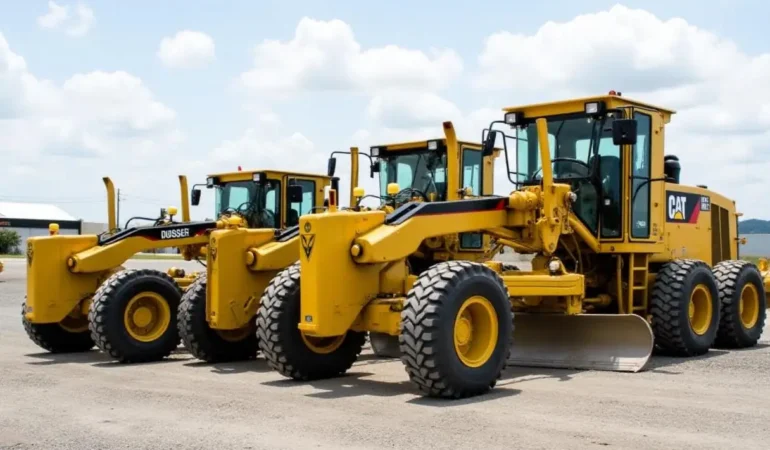
Training Grader in Uganda. If you have been asking “how much is training grader in Uganda,” the short answer is that a full-time grader operator course typically costs somewhere between UGX 1,500,000 and UGX 2,000,000, depending on whether you are a Ugandan national or an international student. But the sticker price only tells part of the story. What that fee actually buys you, whether it includes certification, and how it compares to other heavy machinery courses matter just as much as the number itself. This guide, from the team behind Heavy Trucks Training School, breaks down exactly what grader training costs in Uganda, what drives the price up or down, and how to make sure your money goes toward real machine hours and a certificate that actually opens doors.
Grader Training Cost in Uganda at a Glance
Grader operator training in Uganda runs for a standard four-week programme, with course fees of roughly UGX 1,500,000 for Ugandan nationals and UGX 2,000,000 for international students at established training schools. That fee generally covers machine time, fuel, instructor supervision, safety gear, and the final practical assessment, though exact inclusions vary between schools, so always confirm details before paying anything. For the current, itemised breakdown rather than a rough estimate, check the official fee structure page, and review the full grader operator training course page for what the four weeks actually cover day by day.
What Determines the Price of Grader Operator Training
Several factors push grader training fees up or down between schools. Course duration is the biggest driver, since a grader typically takes four weeks to teach properly, longer than a two-week forklift course but shorter than an eight-week engine mechanics programme. Machine age and fuel consumption matter too, since a grader burns considerably more fuel per hour than smaller equipment, and that cost is built into the fee. Class size affects price as well: schools that keep student-to-machine ratios low so every learner gets real hands-on hours generally charge more than schools that push large groups through limited machine time. Finally, whether the certificate is tied to a recognised national assessment body or is simply an in-house paper issued by the school itself can influence pricing, since accredited assessment carries its own administrative cost.
What Your Grader Training Fee Actually Covers
A properly priced grader course should cover more than just time in the cab. Training typically opens with safety induction and machine familiarisation, covering pre-operation inspections, controls, and gauges before a learner ever moves the machine. From there, instruction builds into blade adjustment, grading techniques, surface levelling, and road-shaping fundamentals, the core skills that separate a certified grader operator from someone who has simply sat behind the controls a few times. The fee should also include supervised fieldwork and a final practical assessment, plus the safety gear needed to train safely. Programmes run alongside excavator and bulldozer training tend to structure fees the same way, so it is worth comparing what is actually included rather than the headline number alone.
Grader Training Cost vs Other Heavy Machinery Courses in Uganda
Seeing where grader training sits alongside other machines helps put the price in context. Based on current published rates, a forklift course runs about UGX 700,000 over two weeks, a TLB/backhoe course costs around UGX 1,300,000 over three weeks, an excavator course is priced similarly to the backhoe at roughly UGX 1,200,000 over three weeks, a bulldozer course sits near UGX 1,300,000 over three weeks, and a grader course costs roughly UGX 1,500,000 over four weeks for nationals. At the top end, mobile crane and tower crane programmes run into the millions of shillings given their five-to-six week duration and specialised equipment. In short, grader training sits in the mid-range of Uganda’s heavy machinery course pricing, reflecting its longer four-week duration rather than unusually expensive equipment. The full, current pricing table for every course is published on the school’s fee structure page.
Why Grader Training Costs More Than Some Machines but Less Than Others
Grader training costs more than a two-week forklift course simply because it takes twice as long to teach the precision required for grading, levelling, and road-shaping work, skills that need more repetition than loading and stacking. It costs less than mobile crane or tower crane training because those programmes run five to six weeks and involve considerably more specialised, expensive equipment and stricter safety protocols. If your budget is tight, it is worth comparing a grader course directly against a wheel loader or forklift course to see which qualification gets you into paid work fastest relative to what you can afford right now, rather than assuming the most expensive course is automatically the best investment.
Hidden Costs to Ask About Before You Pay
The advertised course fee is not always the full cost of training. Ask upfront whether accommodation and meals are included if you are travelling from outside Kampala, since boarding costs at nearby lodgings can add a meaningful amount over four weeks. Ask whether the UVTAB assessment fee, if applicable, is bundled into the course price or billed separately at the end. Confirm whether protective gear such as boots, helmets, and reflective vests are provided or must be purchased independently, and ask whether a certificate reprint or replacement carries an extra charge later on. A transparent school will answer all of these questions clearly before you commit, which is itself a useful signal of how the rest of your training experience will go; the same applies to a school’s about page and how openly it discusses its own track record.
Is Grader Training Worth the Investment? Career and Earning Potential
Uganda’s current construction pipeline makes a strong case for the investment. The Kampala City Roads Rehabilitation Project alone involves dozens of kilometres of road work that depends on grader operators for surface levelling and shaping, and road contracts tied to the Standard Gauge Railway and ongoing oil-sector infrastructure around the East African Crude Oil Pipeline continue to need certified operators. A four-week, roughly UGX 1,500,000 investment that leads to steady site work compares favourably with years of unpaid apprenticeship in other trades, particularly since a grader operator’s skill set transfers directly to heavy machinery jobs across road, mining, and general construction sectors rather than locking you into a single narrow employer. Graduates who later diversify their income sometimes also look at the school’s tourism courses or its post on the best heavy machinery schools in Uganda for a wider view of the sector.
Payment Plans and How to Budget for Training
Most established schools understand that UGX 1,500,000 to 2,000,000 is a significant sum to raise in one payment, which is why instalment plans are commonly available rather than demanding the full fee upfront. Typical arrangements involve a deposit to secure your place on the next intake, followed by balance payments spread across the four-week course. Before committing, ask specifically what happens if you need to pause training partway through, and get any payment plan confirmed in writing rather than relying on a verbal agreement. You can start that conversation directly through the apply now page, where enquiries about instalments are typically handled during the application process.
UVTAB Certification: Does It Affect the Price
Certification tied to the Uganda Vocational and Technical Assessment Board (UVTAB) can add a modest assessment fee on top of the training cost itself, but it is money well spent. A UVTAB-aligned certificate is assessed against a national competency standard rather than issued solely by the training school, which matters enormously when you are applying for jobs with contractors who have never heard of the school you trained at. Institutions such as Kenlink Institute, which runs a dedicated heavy machinery training programme alongside its broader UVTAB-aligned course catalogue, build that recognised assessment into their pricing rather than treating it as an optional extra, which is worth factoring into any price comparison you make between schools.
How Heavy Trucks Training School’s Grader Pricing Compares
Heavy Trucks Training School operates its Kampala campus in partnership with Kenlink Institute, which keeps its grader pricing tied to a genuine UVTAB-aligned assessment framework rather than a standalone in-house certificate. Its published rate sits within the normal market range for a four-week programme, and prospective students can verify the exact current figure directly on the fee structure page rather than relying on word of mouth. The school’s photo gallery and founder’s background are worth reviewing alongside the price, since a fair fee attached to a poorly run course is no bargain at all.
Combining Grader Training With Other Courses to Save Money
If your budget allows for more than one qualification, bundling courses during the same enrolment period is often more cost-effective than returning for separate inductions later. Grader graduates commonly add wheel loader training or forklift training to widen the jobs they qualify for, since both machines appear frequently alongside graders on the same road and site contracts. Others pair grader skills with a commercial driving qualification, since contractors often prefer operators who can also move equipment between sites. Students who read the school’s earlier posts on driving training in Uganda and forklift training will notice the same bundling logic applies across the full heavy machinery course category. On the Kenlink Institute side, students planning to eventually run their own equipment-hire business can look into business consultation services once training is complete, while those wanting to broaden their skills further can browse Kenlink’s language courses alongside their machine qualification.
Admission and Application Process
Enrolling for grader training does not require prior machine experience, only a copy of your national ID or passport, a passport photo, and proof of your highest level of education. Once your documents are ready, you can apply directly through the apply now page, or, if you are considering the wider set of UVTAB programmes under the Kenlink Institute umbrella, review the admission requirements and submit an application through the online application portal. Enrolled students can track fee balances and progress through the student portal once registered, and graduates can browse Kenlink Institute’s careers page for the kind of roles that open up once a certificate is in hand.
Frequently Asked Questions About Grader Training Cost in Uganda
How much does grader training cost in Uganda? Expect roughly UGX 1,500,000 for Ugandan nationals and UGX 2,000,000 for international students, for a four-week full-time course, though exact figures vary by school and intake.
Is grader training more expensive than excavator training? Generally yes, mainly because grader courses run four weeks compared to three weeks for most excavator programmes, not because the machine itself is dramatically more costly to operate.
Does the fee include certification? This varies by school, so always confirm whether a UVTAB assessment fee is bundled into the course price or charged separately before you enrol.
Are payment plans available? Most established schools offer a deposit-plus-instalment arrangement rather than requiring the full fee upfront; ask about this directly when you apply.
Can I reduce my total training cost? Bundling grader training with a second course such as bulldozer training during the same intake can reduce repeated induction and administrative costs compared to enrolling separately later.
Conclusion: Getting the Best Value From Your Grader Training Investment
Grader training in Uganda costs roughly UGX 1,500,000 to 2,000,000 for a four-week course, a mid-range investment that sits above shorter courses like forklift training and below specialised programmes like mobile crane operation. The number that matters most, though, is not the headline price but what it buys: real machine hours, an experienced instructor, and a certificate tied to a recognised national standard such as UVTAB. With road, rail, and oil-sector projects across Uganda all competing for certified grader operators right now, a well-chosen course pays for itself quickly once you are on site. Check the current, exact pricing on the Heavy Trucks Training School fee structure page, explore the full course listings, or visit Kenlink Institute’s about page to learn more about the UVTAB-aligned institute behind the certification.